
 Real Wood Veneer vs. Reconstituted Wood Veneer: Does It Really Matter?

When my clients are looking to redo their kitchen and want the warmth and character of wood, it can difficult to choose between real wood veneers and reconstituted veneers.
Walnut, white oak, and cherry can help create a beautifully designed Kitchen, although there can be significant differences in price, availability, lead time and appearance depending on whether you choose a natural or reconstituted veneer.
And here’s something many homeowners don’t realize: Reconstituted veneer is still made from real wood.
So what’s the difference—and does it matter in your kitchen?
What Is Reconstituted Wood Veneer?
Reconstituted veneer is made from real wood that has been processed and engineered to create a more consistent grain pattern and color.
One of its biggest advantages is consistency.
When designing a client’s kitchen, we’re working with several individual components—cabinet doors, drawer fronts, finished panels, fillers, light rails and toe-kicks.
With reconstituted veneer, it’s generally easier to maintain a consistent appearance from one piece to another and throughout the entire kitchen.
It also offers potentially shorter lead times, depending on the material and supplier.
The tradeoff?
That consistency can sometimes make the wood appear a little more uniform or repetitive. You may not get quite as much of the one-of-a-kind character you’d see with natural wood.
Project samples:
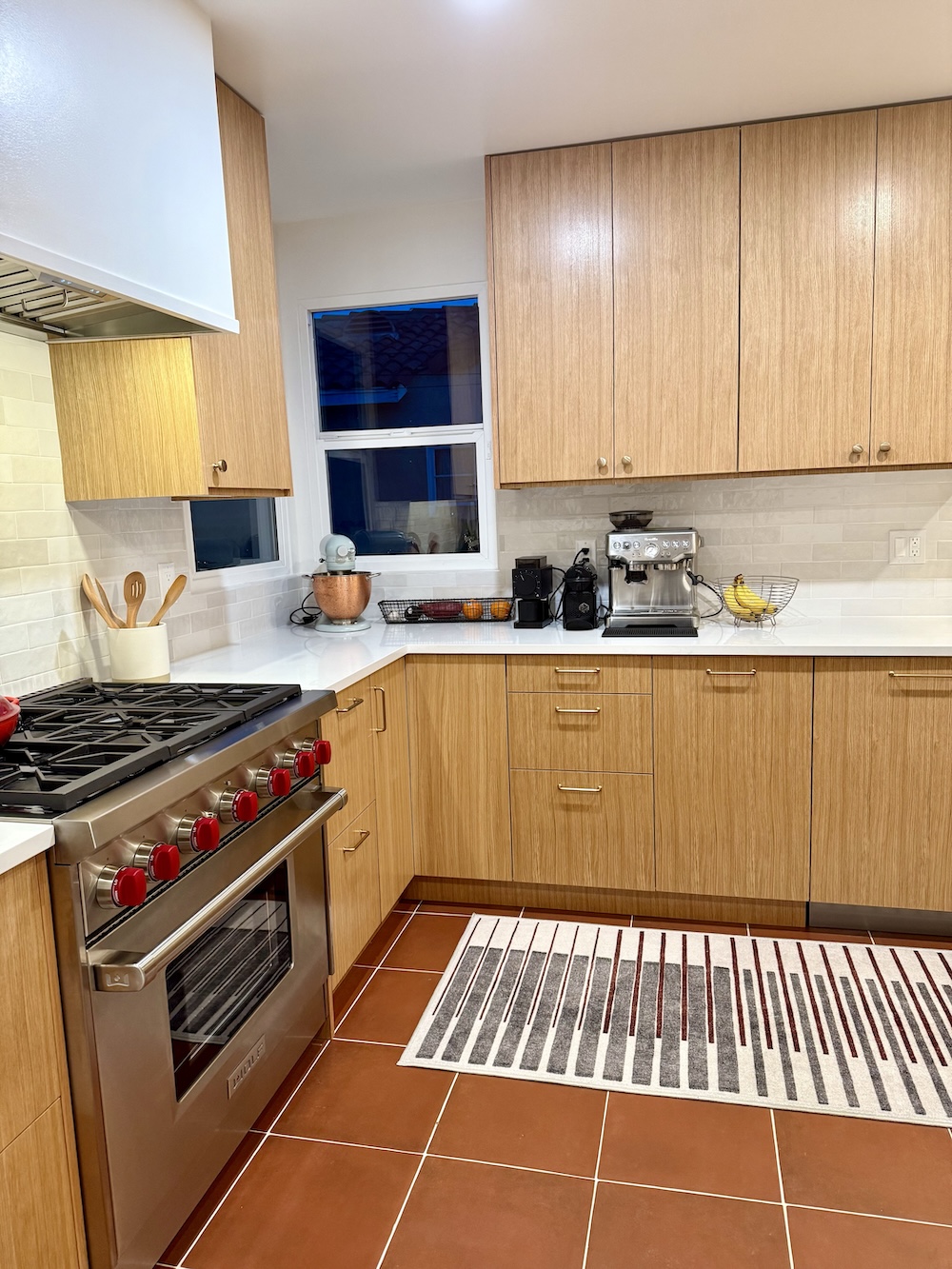
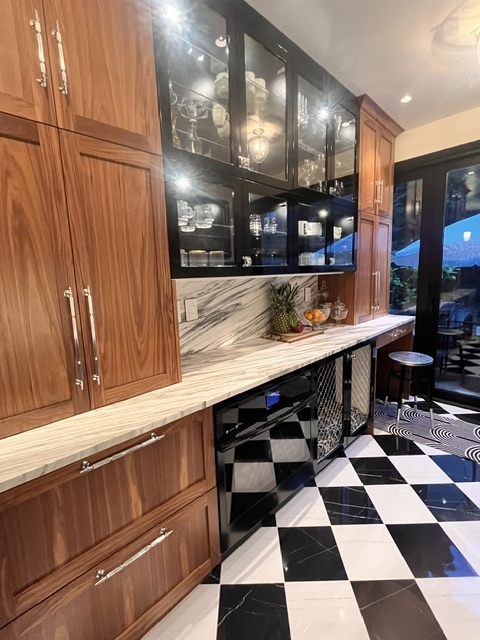
What About Natural Veneer?
Natural veneer gives you something that’s difficult to manufacture:
Natural variation.
Every tree is different, which means grain patterns, color and tone can vary from one section of veneer to another.
That’s part of its appeal.
Natural walnut, white oak or cherry can give your new Kitchen a more rich, organic appearance where you can appreciate the individuality of the wood.
But that individuality can also create challenges.
Color and grain can vary significantly from sheet to sheet. If you’re trying to create a very consistent appearance across a larger kitchen, matching those pieces takes more planning and may require more veneer slabs.
Availability can also affect the project cost, and lead time, particularly if you’re trying to achieve a very specific grain or tone.
Project samples:
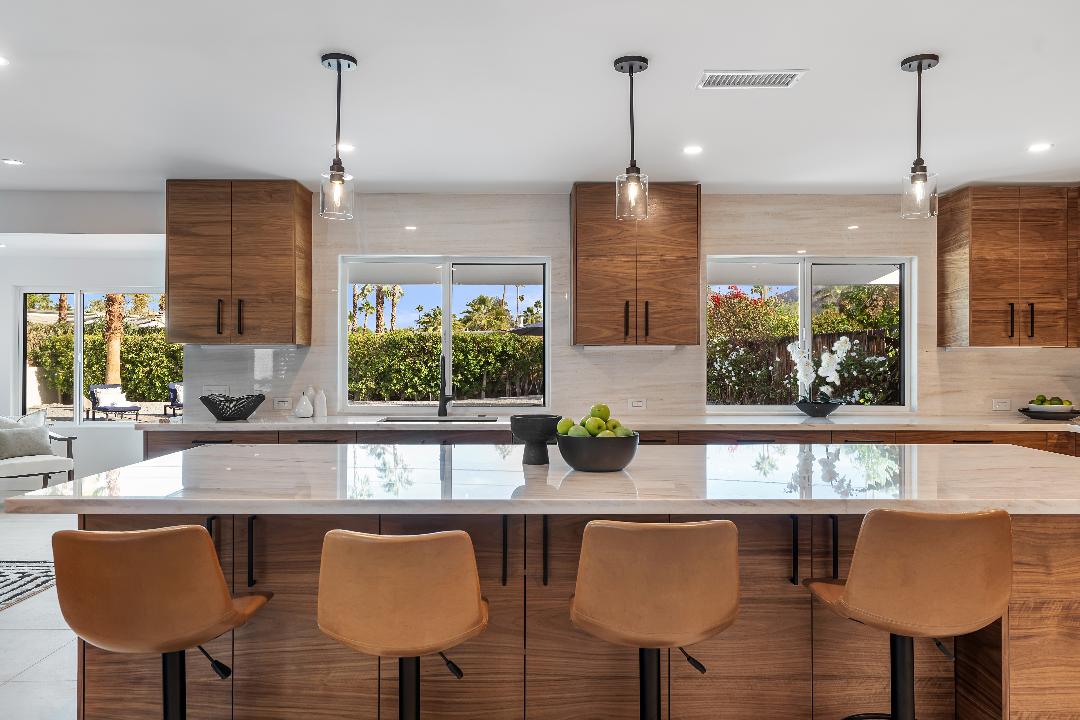
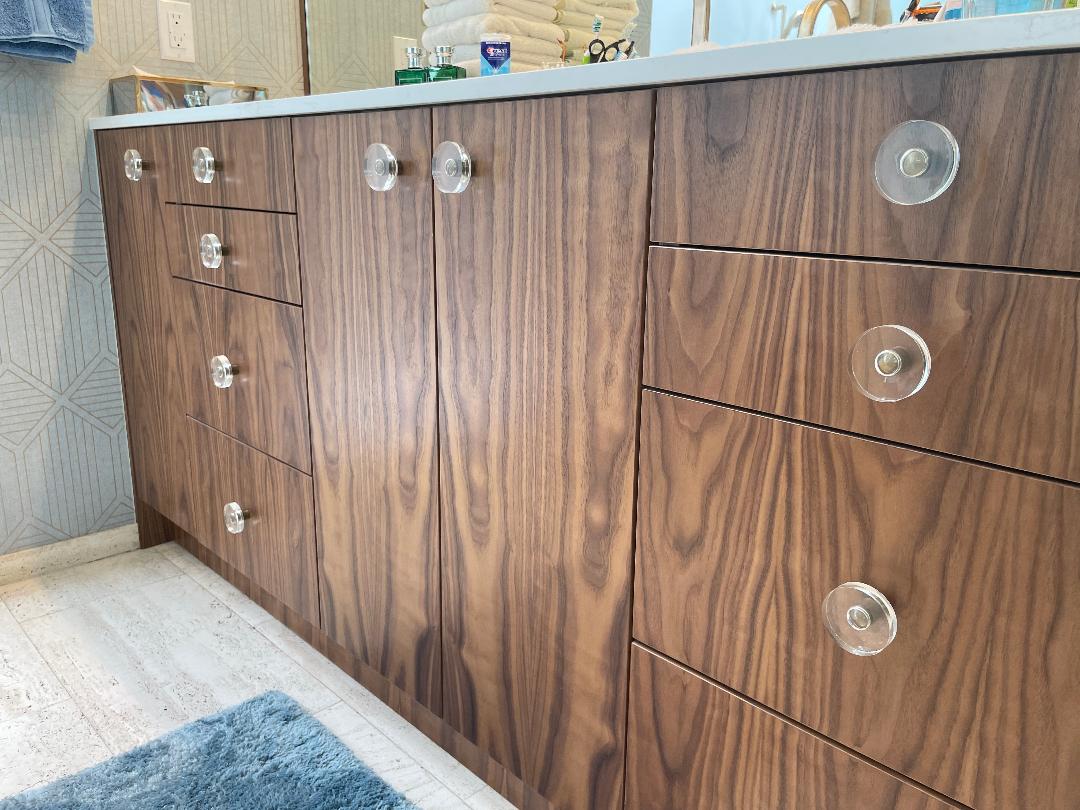
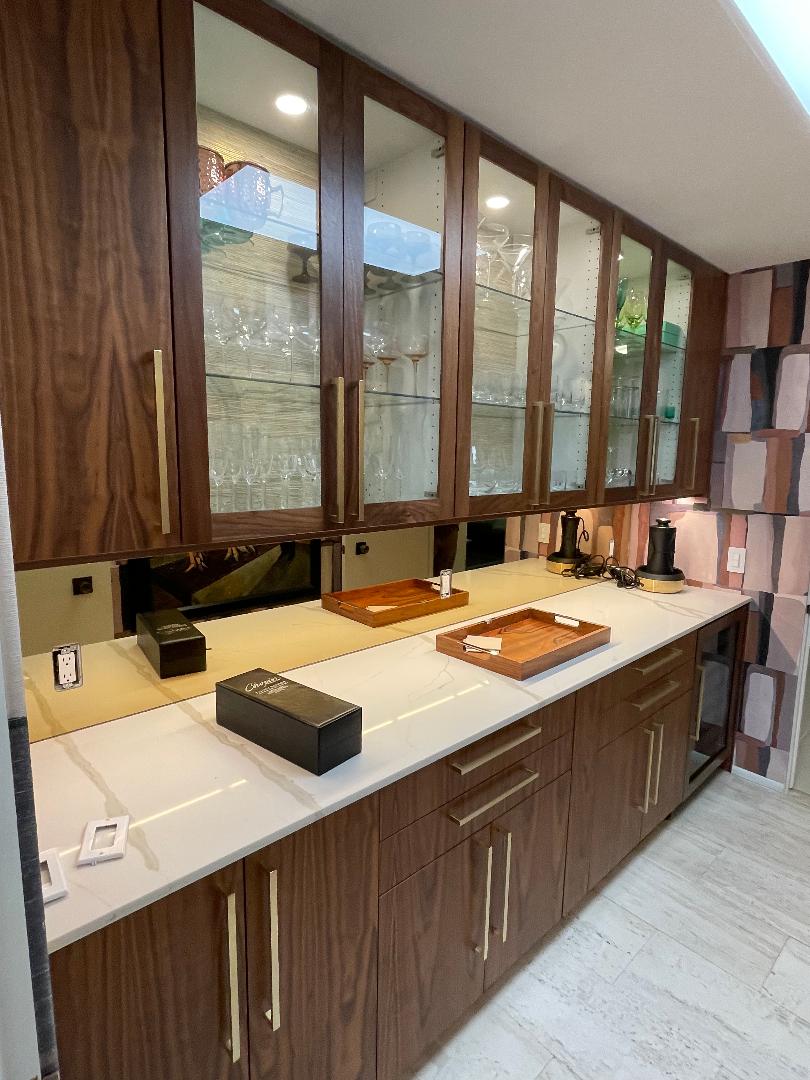
Consistency or Character?
This is where the decision becomes less about which material is “better” and more about what you want your kitchen to look like.
If you want a very clean, contemporary kitchen where the wood grain flows consistently throughout the cabinetry, reconstituted veneer can be an excellent choice.
If you want to see the natural variations, grain patterns and individual character that make every piece of wood a little different, natural veneer may be worth the additional cost and planning.
Neither choice is automatically right or wrong.
They’re simply unique to various tastes, and the needs of my clients.
Don’t Forget About the Budget
This is also where good Kitchen planning can make a difference.
If you love the appearance of walnut, for example, that doesn’t necessarily mean you have to choose the most expensive natural walnut option throughout the entire kitchen.
Depending on the design, a reconstituted walnut veneer may give you the warmth and overall appearance you’re looking for while helping control the budget and potentially reducing lead time.
On the other hand, if the natural variation and character of the wood is one of the things you love most about the kitchen, spending more for natural veneer may be exactly where you want to put your money.
This becomes a more personal decision.
Look at the Materials Before You Decide
Whenever possible, I recommend looking at actual samples rather than making this decision from a photograph or computer screen. Order samples from your designer, or direct from the fabricator.
Put samples of your paint choice, tile selected, and a sample of your flooring next to your countertop sample, in the existing Kitchen. Seeing them all together in the natural light of your Kitchen will greatly help you decide which finishes look best.
And most importantly, look at the grain and variation.
Ask yourself whether you want the cabinetry to have a very consistent appearance—or whether those natural differences are part of what makes the wood beautiful to you.
So Which One Should You Choose?
If you’re looking for consistency, easier matching, availability and potentially a lower price point, reconstituted veneer deserves serious consideration.
If you’re looking for natural variation, distinctive grain and the unique character of real wood, natural veneer may be worth the additional investment.
As with so many decisions in Kitchen design, there isn’t one answer that’s right for everyone.
The important thing is understanding what you’re paying for—and what you’ll see when the kitchen is completed.
That’s where working with a knowledgeable Kitchen designer can help.
A good designer can help you compare materials, understand the tradeoffs, and determine where spending a little more will make a meaningful difference—and where it won’t.
Because creating your Dream Kitchen isn’t always about choosing the most expensive material.
It’s about choosing the right material for the way you want your Kitchen to look, feel and function.
When you’re ready to chat about your kitchen remodel, call us at (323) 496-9104, email us at dezignblue@gmail.com or schedule a Free Consultation.